

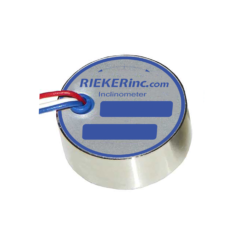
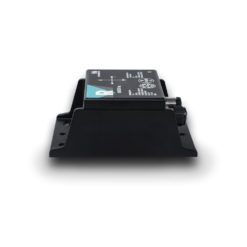
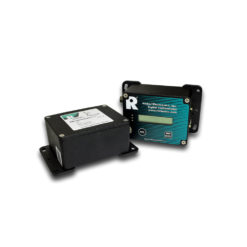
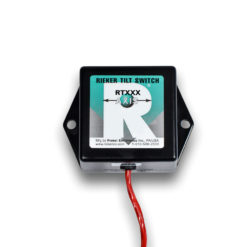
Electronic Sensors - Quick Comparison Chart
Inclinometer and Accelerometer Electronic Sensors
Rieker provides a comprehensive range of inclinometer and accelerometer electronic inclinometer sensor designed for various applications, including:
- Vehicle tilt monitoring
- Slope measurement
- Boom angle indication
- Hydraulic motion control
- Wheel alignment
- Vibration indication
- Pitch & roll measurement
These electronic sensors are available in semi-custom and custom configurations. Contact Rieker today to discuss your specific needs.
The electronic inclinometer sensor are gravity-based with no moving parts and nothing to break – very reliable for rugged applications.
Versatile Digital Inclinometers with Customizable Outputs
Rieker also offers a versatile series of digital inclinometers featuring:
- LCD display
- Multiple outputs, including analog, digital, and switch options
- Customizable angle monitoring
- Early warning tilt indication system
These digital inclinometers are among the most customizable on the market, providing a large selection of outputs, resolutions, and pricing options.
Applications of Inclinometers
Inclinometers, also known as tilt sensors, tilt indicators, slope meters, slope gauges, gradient meters, gradiometers, level gauges, or level meters, are instruments used to measure angles of slope and inclination relative to gravity by creating an artificial horizon. These instruments are widely used across various industries, including:
- Aviation
- Civil Engineering
- Government
- Marine
- Military
- Transportation
Common applications include platform leveling, boom angle indication, and slope angle measurement.
The tilt angle range is the range of desired linear output measured in degrees. Important specifications to consider when searching for tilt sensors and inclinometers are the tilt angle range and number of axes.
Rieker electronic inclinometer sensor are gravity-based, repeatable, accurate, rugged, and reliable for harsh environments. Rieker also manufactures a versatile series of digital inclinometers with a large selection of outputs, resolutions, and prices.
FAQs For Electronic Sensors
How Many Axes Are Available In Inclinometer Sensors And Why Does It Matter?
Inclinometer sensors come in 1-axis, 2-axis, and 3-axis configurations. The axis configurations apply to measuring tilt in a single plane (1-axis) or multiple planes (2 or 3-axis). Selecting the correct number of axes will guarantee that the motion, or the angle associated with the motion, can be accurately measured within the application.
What Tilt Angle Range Should I Look For In An Inclinometer Sensor?
The tilt angle range indicates the degrees of tilt in which the inclinometer sensor will produce a linear response (for example, ±10°, ±30°, ±90°, or from -10° to +90°). Choosing the appropriate tilt angle for your system maximizes the precision and full-scale reading of your sensor’s output.
Are Rieker Inclinometer Sensors Suitable For Harsh Environments?
Yes, Rieker’s inclinometers and electronic sensors are sturdy, gravity-operated devices that do not have any moving parts, come in strong enclosures with IP 68 ratings, and are suitable for operation in a wide temperature range.